What it covers
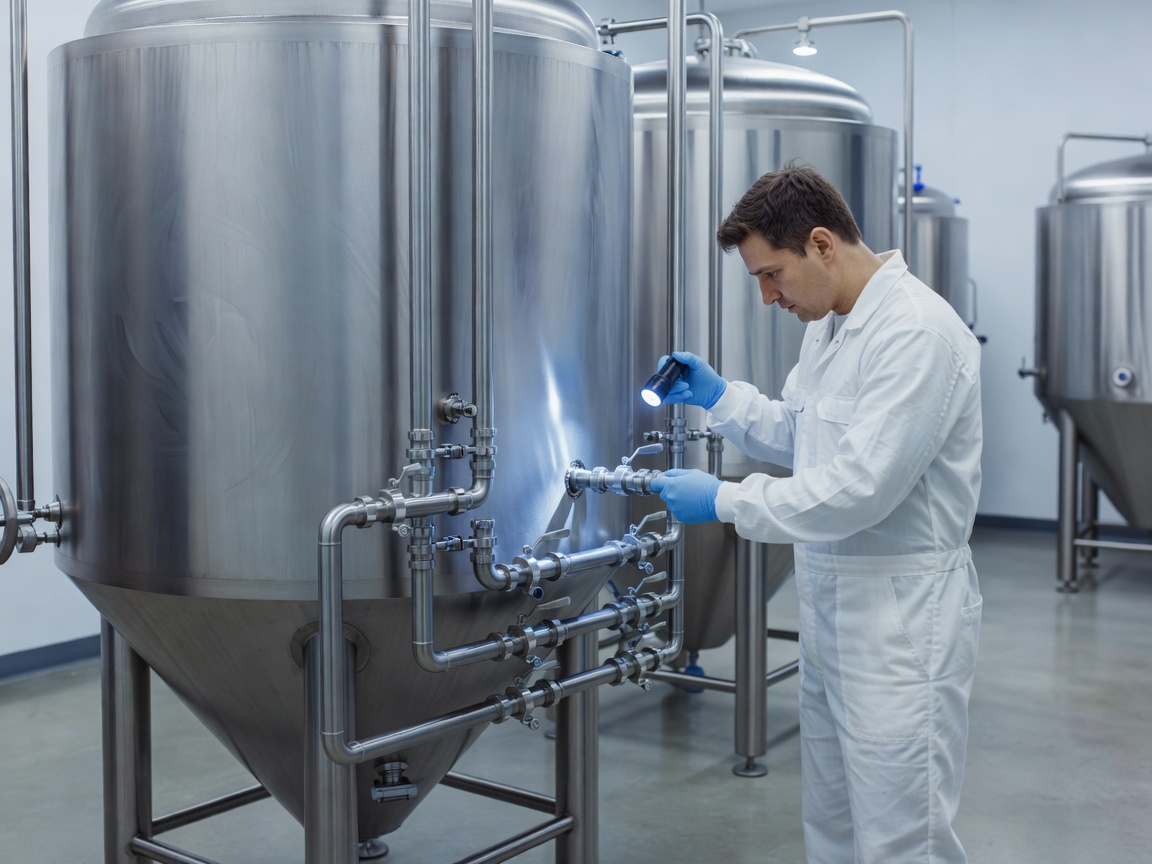
Five areas matter: tanks, pumps, valves, pipework and controls. Maintenance starts with observation. The work identifies visible deterioration, loose or damaged connections, contamination risks, unusual wear and items that need qualified follow-up.
The scope can include brewhouse equipment, fermentation vessels, bright beer tanks, heat exchangers, glycol equipment, filtration hardware, kegging equipment and supporting utilities. The exact scope depends on the installation, manufacturer information and site procedures.
Typical workflow
- Review. Confirm equipment history, known issues, access limits and current maintenance records.
- Inspect. Check accessible surfaces, guards, fittings, seals, instruments and visible service indicators.
- Classify. Separate observation, planned work and issues requiring immediate isolation or specialist assessment.
- Record. Capture equipment identity, location, condition and recommended next action.
Inspection points
Look at mechanical condition before assuming a control fault. Check for vibration indicators, damaged insulation, corrosion, leaking seals, poor hose routing, missing guards and signs of repeated adjustment. Electrical observation remains visual unless carried out by qualified personnel under the site’s electrical controls.
Common maintenance concerns
- Seals and gaskets losing condition.
- Valve handles, actuators or feedback points becoming unreliable.
- Pipe supports, flexible connections or clamps showing movement.
- Instruments drifting or displaying inconsistent readings.
- Records not identifying the asset, date or action required.
Advantages and limitations
A consistent inspection creates a clearer maintenance queue. It helps operators discuss equipment using evidence rather than assumptions. It does not replace manufacturer servicing, electrical testing, pressure-system examination, hygienic validation or statutory inspection where those apply. It does not make an unsafe system safe by itself.
Planning considerations
Service intervals depend on equipment type, operating conditions, manufacturer requirements, cleaning exposure and site history. Group work by access, isolation and hygiene requirements. Keep replacement parts, drawings and previous observations available. Qualified personnel must manage steam, electrical systems, chemicals, pressure and confined-space risks.
Good for
Breweries building a maintenance register, reviewing inherited equipment, preparing planned shutdown work or bringing several equipment categories into one documented routine.
What to know
Visible condition is only one input. A component can look acceptable and still require functional testing. Follow equipment documentation, site procedures and applicable safety requirements.
Related services
Use the fermentation tank service for vessel-specific checks, or the pumps and valves inspection for flow-control equipment.