What it covers
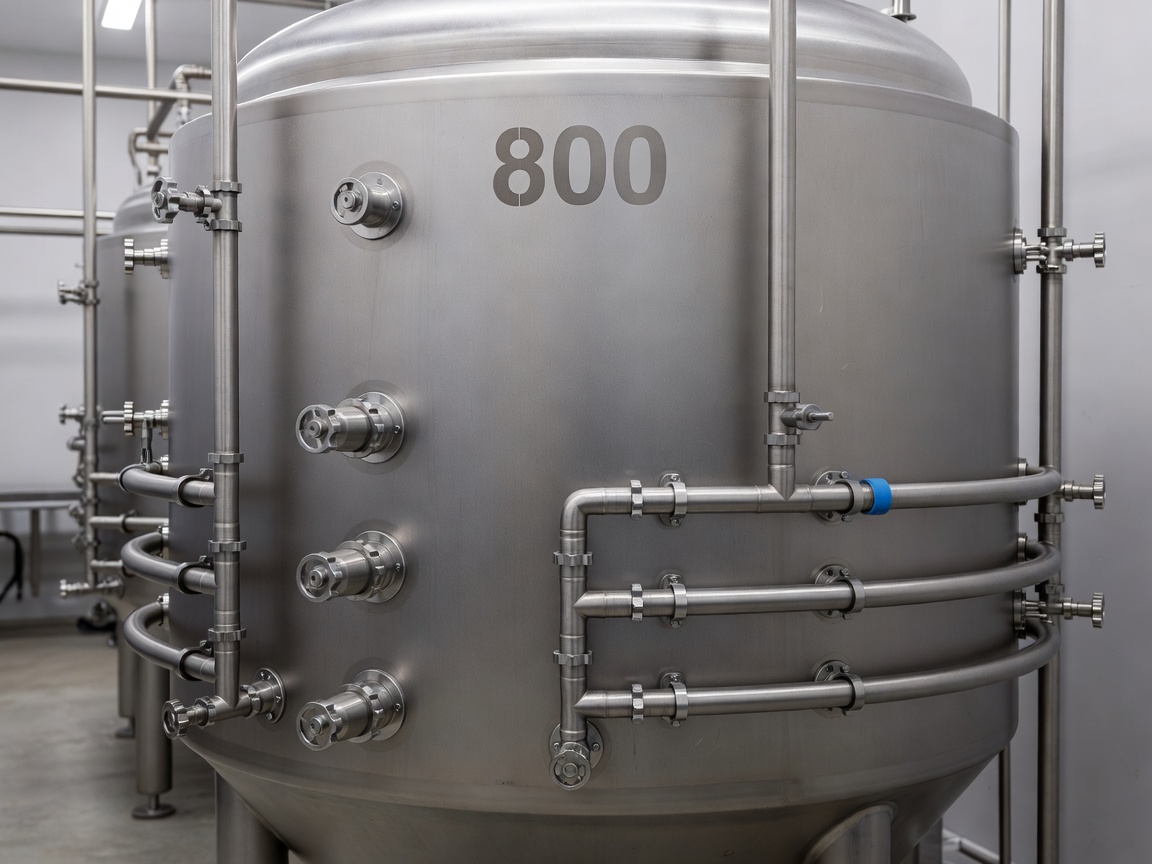
Fermentation vessels combine a tank body with valves, sample points, temperature-control connections, fittings, instruments and cleaning interfaces. Each part matters. A service review examines accessible condition and records observations without assuming that one vessel design represents another.
The work can include fermentation tanks, bright beer tanks and related glycol or control connections. Pressure-related equipment requires the manufacturer’s documentation, site isolation controls and qualified personnel. No inspection summary replaces a required pressure examination.
Equipment involved
- Vessel shell, manways, doors and external supports.
- Product, gas, drain and sample connections.
- Temperature-control jackets, sensors and associated lines.
- Relief, venting and pressure-control components.
- Gaskets, clamps, sight components and instrument ports.
Workflow
- Identify. Match the vessel to its asset record and available drawings.
- Review. Check previous leaks, temperature observations, cleaning concerns and service history.
- Inspect. Observe fittings, supports, seals, labels, surfaces and accessible controls.
- Report. Record condition, follow-up requirements and questions for the equipment owner or manufacturer.
Inspection points
Pay attention to clamp faces, gasket seating, valve bodies, sample assemblies, drain paths and sensor mounting. Check for residue, damage, corrosion, movement, poor routing or evidence of repeated intervention. Surface appearance alone does not establish hygienic suitability.
Common concerns
Frequent issues include flattened gaskets, damaged ferrules, hard-to-operate valves, inconsistent temperature indication, poorly supported flexible lines and unclear identification of relief or vent components. A leaking connection may have a seal, alignment, pressure or installation cause. Diagnose before replacing parts.
Advantages and limitations
Tank-specific records make recurring observations easier to compare. They also separate vessel condition from upstream pump or downstream transfer problems. The limitation is access. Internal, electrical, pressure and confined-space work requires separate controls and suitably qualified personnel.
Planning considerations
Service intervals depend on tank design, operating conditions, cleaning exposure, manufacturer requirements and site history. Coordinate vessel work with product status, isolation, chemical handling and access planning. Do not open or enter equipment until the site procedure confirms it is safe.
Good for
Sites with multiple vessels, inconsistent tank records, recurring connection observations or a need to align tank condition with planned maintenance.
What to know
Temperature-control problems can originate in sensors, controls, glycol circuits or heat-transfer surfaces. Check the complete chain before assigning a cause.
Related services
Pair this work with CIP system service and general equipment maintenance.