What it covers
CIP means clean-in-place. The equipment circulates cleaning solutions through defined paths without routine dismantling of every process component. Service focuses on the hardware that supports the site’s cleaning procedure. It does not certify cleaning performance.
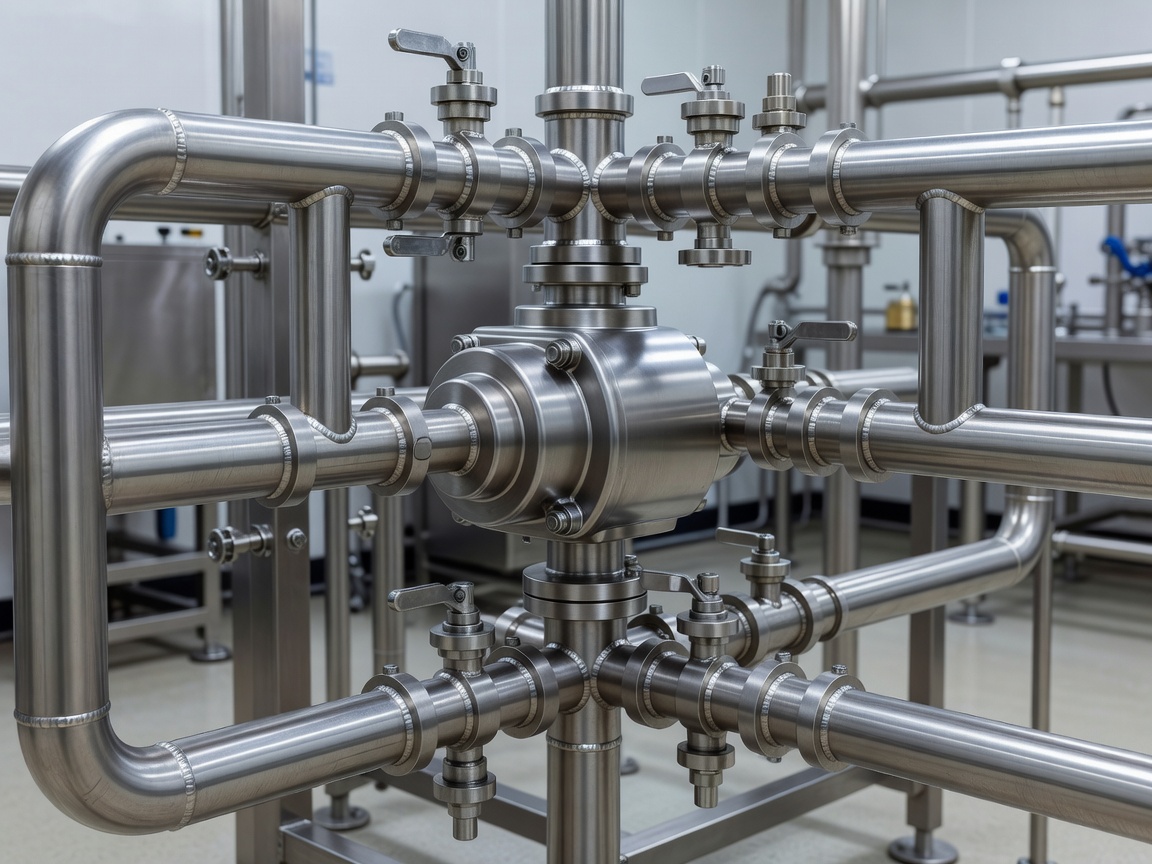
The scope can include solution tanks, transfer pumps, valves, return lines, spray devices, hose connections, instrumentation and control interfaces. Design, chemistry, time, temperature, flow and site verification are installation-specific.
Equipment involved
- CIP solution and recovery tanks.
- Supply and return pumps.
- Manual valves, actuated valves and valve clusters.
- Spray devices, return paths, hoses and clamps.
- Level, temperature and conductivity instruments where installed.
Service workflow
- Review. Read the cleaning schematic, asset records and current procedure.
- Trace. Confirm intended supply, return and drain paths without bypassing site controls.
- Inspect. Observe tanks, pumps, seals, valves, connections, supports and accessible instruments.
- Document. Record condition and route concerns for qualified follow-up.
Inspection points
Check tank condition, access covers, drain arrangements, pump seals, valve actuation, hose routing and connection identity. Look for dead-leg concerns, trapped liquid indicators, damaged gaskets, poor support and unclear valve status. A visually clean exterior does not prove that an internal path is clean.
Common concerns
Cleaning-system issues can arise from a failed pump, incorrect valve position, restricted return path, damaged spray device, leaking connection or inaccurate instrument. Chemical concentration and cleaning performance must be managed under the site procedure. Never improvise chemical handling.
Advantages and limitations
A hardware review makes the cleaning path easier to discuss and maintain. It can identify access, connection and condition concerns before planned work. It cannot validate a cleaning cycle or establish microbiological performance without the site’s qualified verification process.
Planning considerations
Cleaning agents may be hazardous. Follow safety data, manufacturer documentation and site chemical controls. Isolate equipment before service. Intervals depend on design, duty, chemistry, operating conditions and manufacturer requirements. Include hoses, gaskets and small fittings in the record.
Good for
Sites changing cleaning routes, adding tanks, investigating recurring connection concerns or bringing CIP assets into a formal maintenance register.
What to know
Flow-path integrity is a system issue. Pump condition, valve sequencing, return design and connection identity all matter.
Related services
Pair this review with fermentation tank service or general equipment maintenance.