Scope
Brewhouse systems move, heat and control process liquid through several connected stages. A useful maintenance review follows the process path. It considers the vessel, transfer route, pump, valve, heat exchanger, sensor and control point together.
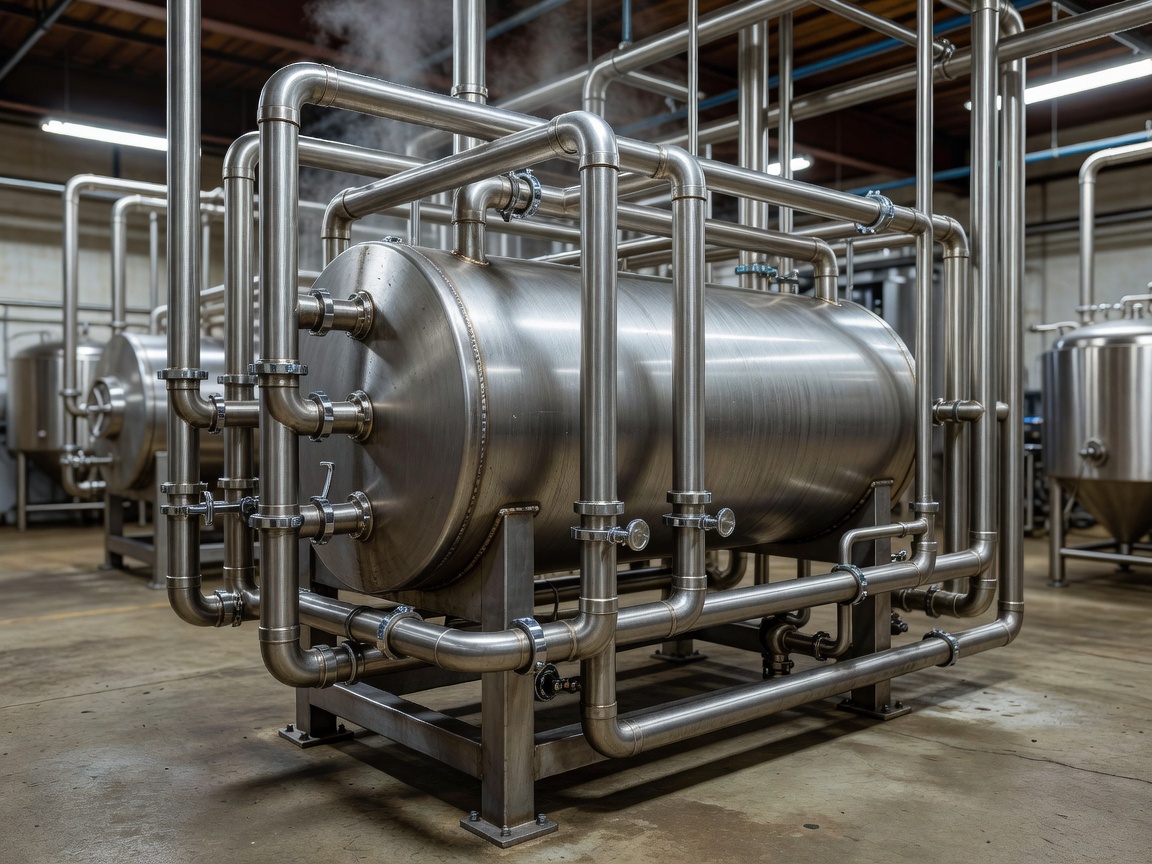
The review may include mash vessels, lauter equipment, kettles, whirlpool equipment, wort lines, heat exchangers, pumps and utility connections. Equipment design varies. Manufacturer requirements and site procedures take priority over a generic checklist.
Equipment involved
- Mash and wort-processing vessels.
- Transfer pumps and sanitary pipework.
- Steam, thermal-fluid or other heating interfaces.
- Heat exchangers and cooling connections.
- Manual valves, actuators, sensors and control panels.
Typical workflow
- Map. Confirm the process route and identify equipment boundaries.
- Observe. Check accessible condition, supports, guards, leaks, noise indicators and instrument displays.
- Compare. Review records against previous observations and manufacturer information.
- Plan. Assign follow-up work according to isolation, hygiene and qualified-person requirements.
Inspection points
Look at pump seals, valve operation, clamp faces, expansion points, pipe supports and heat-exchanger connections. Check whether instruments are identified and whether readings are consistent with the operating record. Heating systems require particular care. Steam, hot liquid and stored energy must be managed under site controls.
Common maintenance concerns
Repeated leaks can indicate alignment or support problems. Poor transfer can involve a pump, valve position, blocked path, air ingress or control issue. Heat-exchanger observations may involve fouling, connection condition or utility performance. Do not diagnose from one symptom.
Advantages and limitations
A process-path review reduces the chance of treating an isolated component as the whole problem. It provides a practical work list for shutdown planning. It is not a replacement for pressure-system examination, electrical testing, boiler or steam-system work, or process validation.
Planning considerations
Coordinate work with hot surfaces, steam, chemical cleaning, product status and access. Intervals depend on design, operating conditions, manufacturer requirements and site history. Keep P&IDs, equipment manuals, asset identifiers and previous service notes available.
Good for
Breweries dealing with recurring transfer observations, inconsistent instrumentation, difficult shutdown planning or a mixed-age brewhouse installation.
What to know
Instrumentation tells operators what the system reports. Mechanical inspection tells them what the equipment is doing. Both records matter.
Related services
See pumps and valves inspection for flow control and CIP service for cleaning paths.